Leon Laszlo
Systems Designer, QA Game Tester, Professional GM
Contacts & Info
Game Projects


About Me
Hello! I'm a 22 year old trans woman from Sweden. My new name is going to be Leona Dawn Fable but I haven't changed it just yet. I've been into video games since I was six, the first game I ever played was Halo 3 with my dad; Mom was furious. It’s ironic that I fell in love with games thanks to my mom. She is a skilled artist, having studied both in Sweden and London. Through her eyes I could see that games are more than a thing to play, a good game can be the strongest form of art ever.I started my education for game development with quality assurance at Futuregames Boden some years ago. It's here that I learned a lot about scope, efficiency and the skills required to make a game within a set deadline. As part of my education there I also had an internship at Northify, a Q/A Game Testing company, I spent 6 months working there and once my education ended I decided to head back home and continue my studies at Playground Squad this time as a Game Designer.My time at PlaygroundSquad has helped me get into the creation process a lot more than when I was doing bug testing, but I still tried to combine my skills during this education. It's here that I fell in love with Systems Design. There is just something about numbers, data, spreadsheets that made me feel like my Q/A skills and design skills were combining into one pool. I've been called crazy a couple of times when I show my spreadsheets or massive flowcharts, but I wear that stamp with pride.During my education at PlaygroundSquad I also thought I'd try my hand at professional GMing. I've been a game master for table top games for about ten years now, and some time ago I found a website that lets you set up paid games. Now I of course ran my own home games for free, but I always wanted to see if I could start my own profitable business, even if small! After a lot of preparation and some struggles finding the right players, I now host weekly paid campaigns and I've run over 40 paid sessions in my own homebrew world of Avoliof using the Dungeon and Dragons system. I've been working on this world for over five years now, and I'll probably continue working on it in my free time throughout the future.Thank you for taking the time to read this!
Contacts & Info
Black Gold
Systems Design
- Genre: Survival Citybuilder
- Platform: PlayStation 5
- Engine: In house (Tengine)
- Time: 6 Weeks
- Team Size: 12
Black Gold was my first project at PlaygroundSquad.We used a scrappy in-house engine to work on the game,and if we hadn't I don't think I would have found my love for systems design.Black Gold is a strategy city builder, with inspirations from games like Frostpunk and Surviving Mars.I worked on Systems Design for this project, creating the balancing around the core gameplay loop, as well as reworking many parts of the core loop. I also rebalanced many of the events in the game, and even made some of them myself.
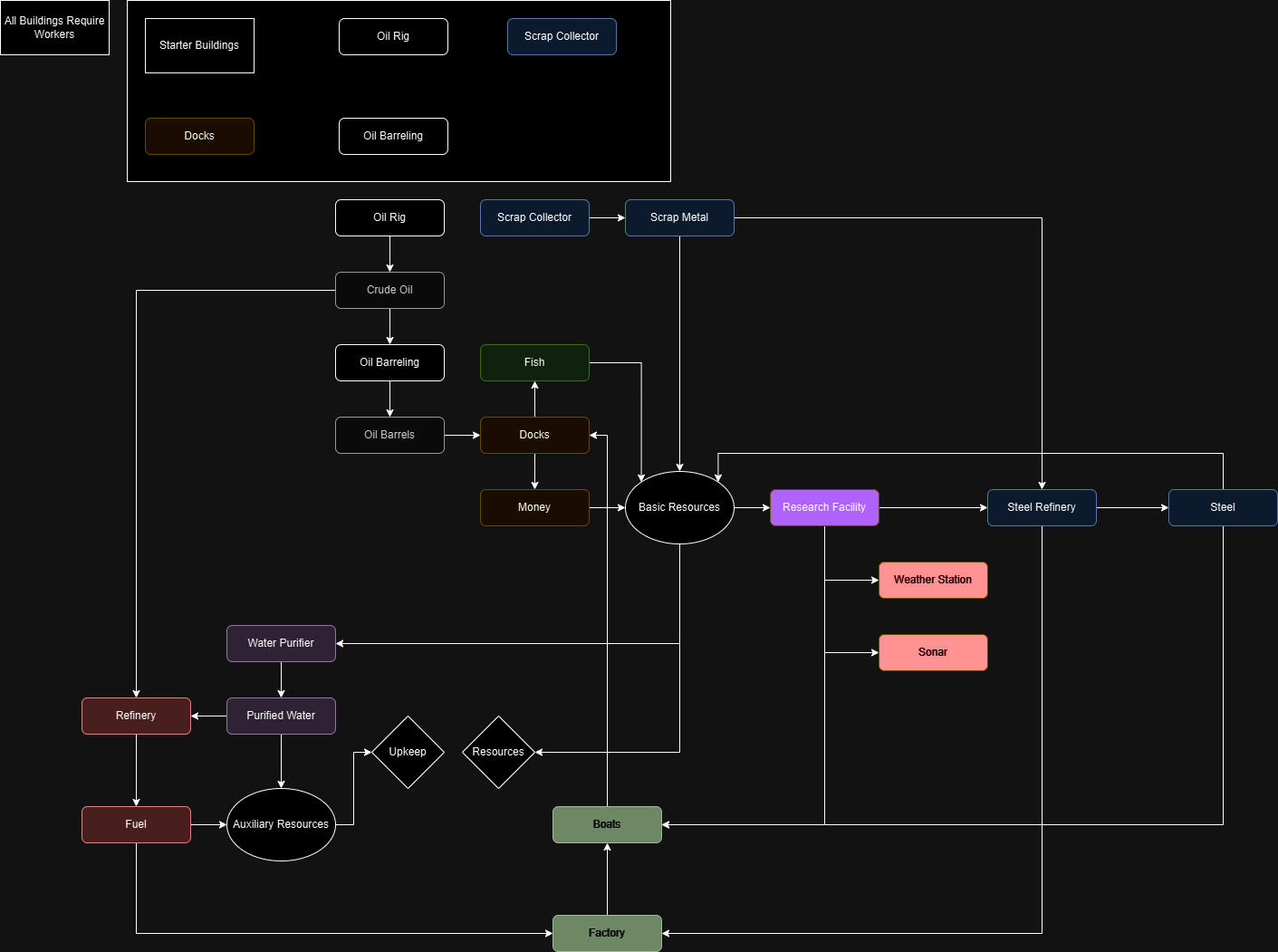
Since we were making a strategy game the first thing I got started on was making a flowchart graph of how the player would go about gaining resources.This flowchart showcases what buildings the player starts with, what resources they gain from those buildings, and how those resources lead into new buildings that then lead into new or more resources.The flowchart helped other designers as well as programmers to understand how the internal logic of the game worked, as well as helped me draft ideas of how the progression should work in the game, and when the player got access to new buildings and resources.
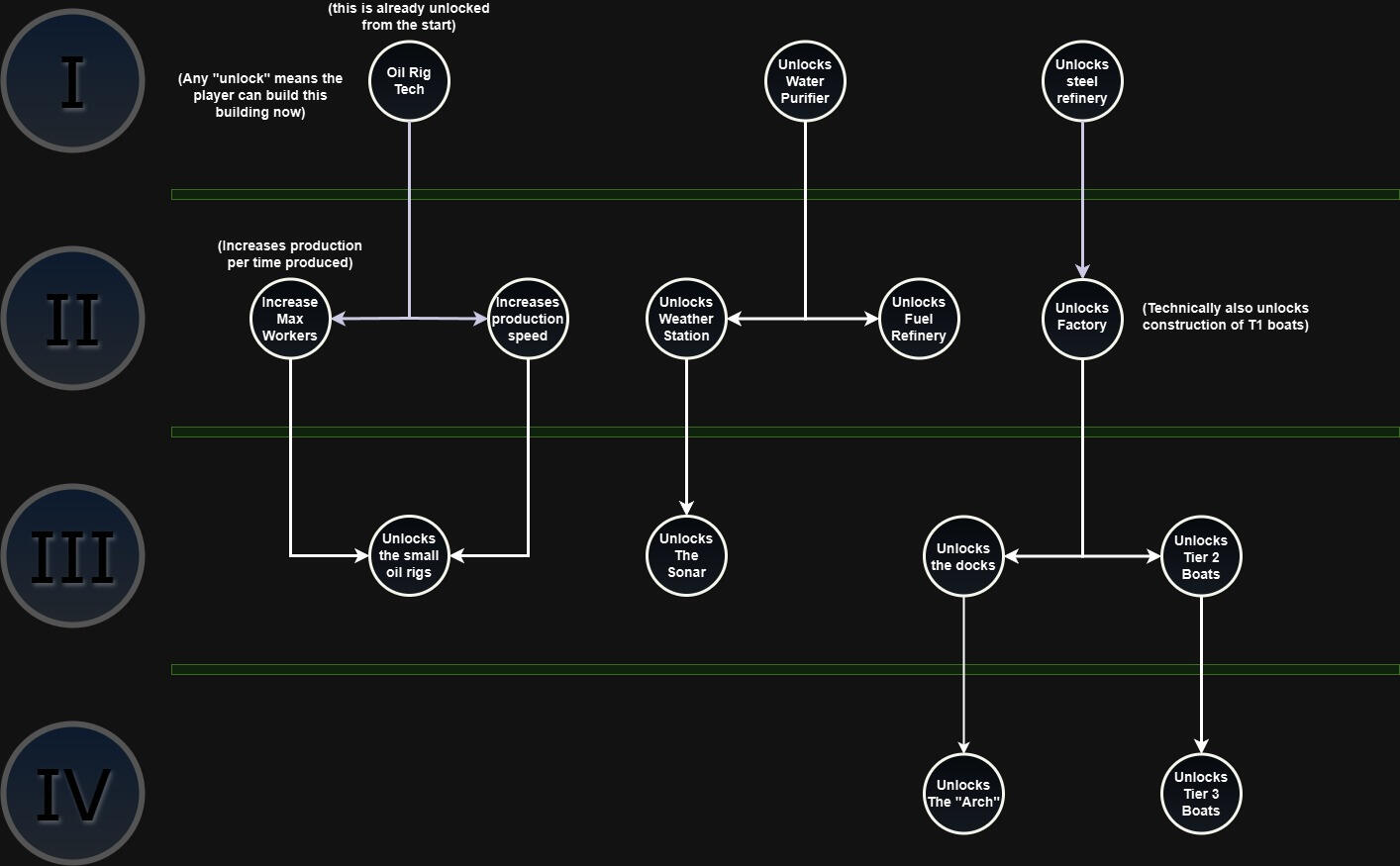
During development I helped work on the research tree which we can see the final version in the image here.This graph used to only have 3 tech tree's but I later reworked it to have 4 on account of the boats becoming a more complex part of the game. With the "Arch" being one of the ways to finish and win the game if the player built it.This simple technology tree was surprisingly complex to make, figuring out how to make it easy for the player to understand without making the game feel boring or too easy was a delicate balancing act.
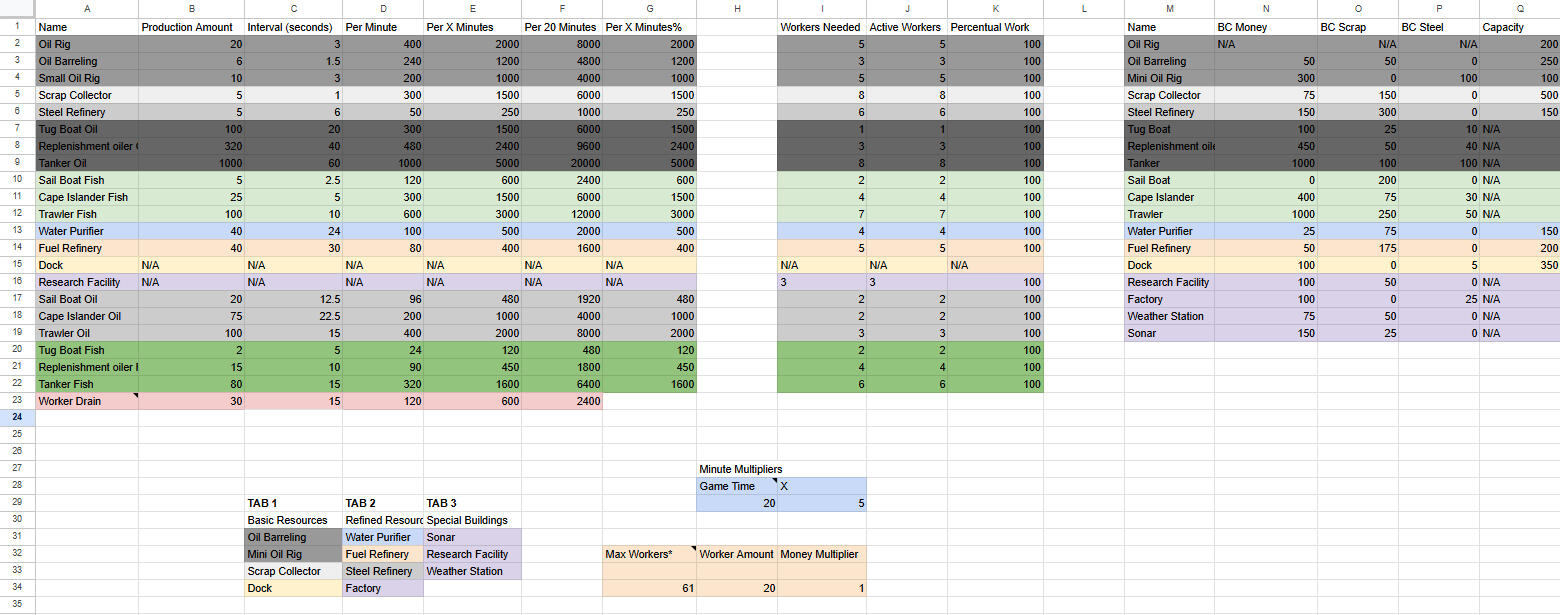
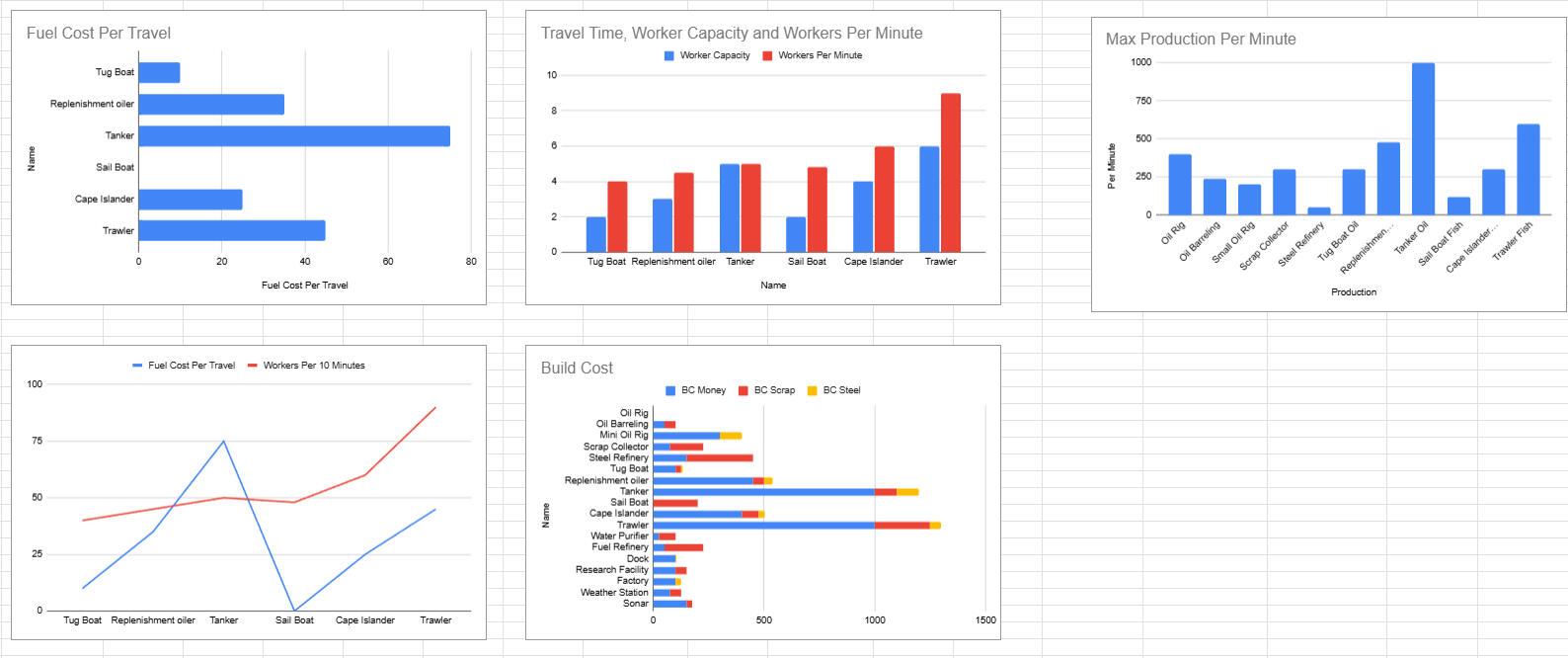
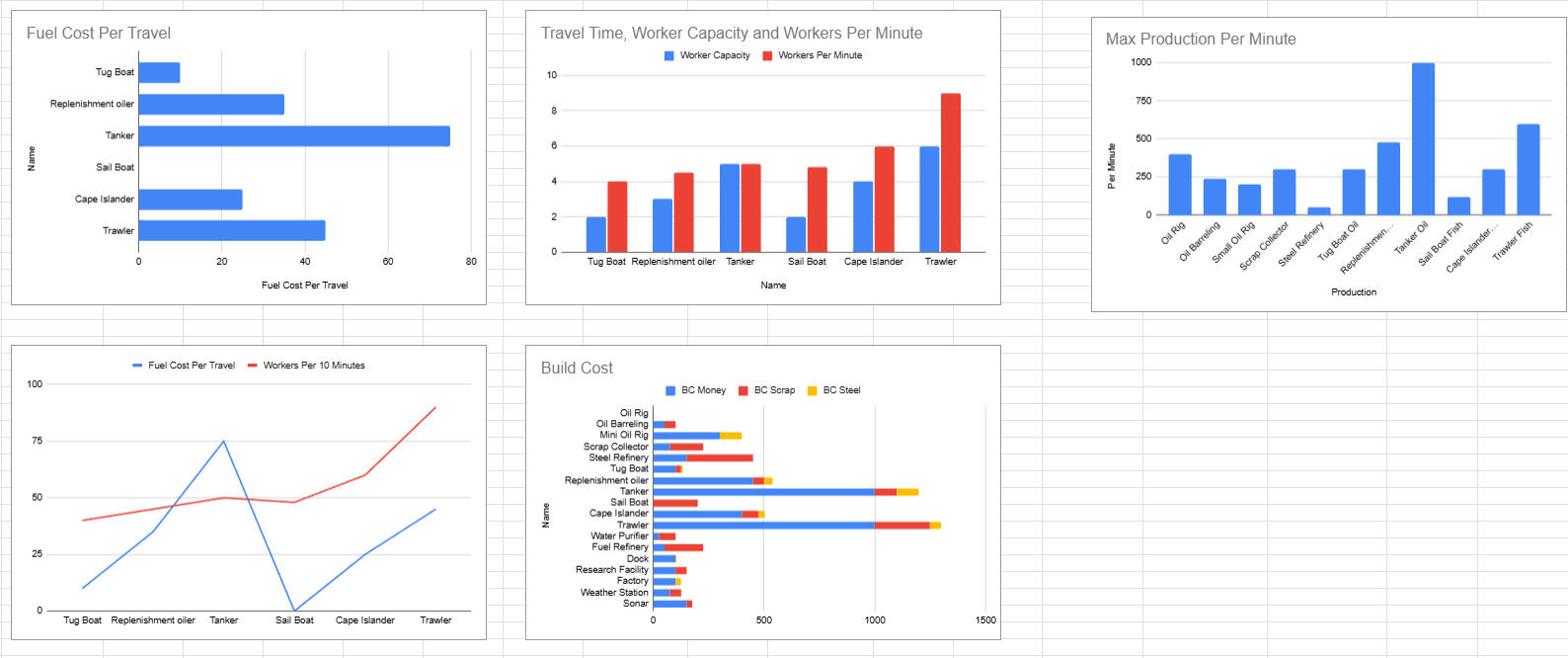
Ah my beautiful insanity, here we can see some spreadsheets and data tables that I created during the development progress of Black Gold. We were using an in house engine which meant even getting simple code or textures into the game took a while. As such I found myself recreating the game in google sheets since it was a strategy game.I could create all the costs, resources, and how much the player would have each minute in a rough estimate. I remember myself "playing" the game in this cursed yet amazing simulation.This is where I ran by most of the balancing of the game and how I designed Black Gold to fit the game philosophy we had of creating a real time strategy game that would be played between 20-40 minutes.Overall Black Gold was an amazing introduction to PSQ and this game will always hold a special place for me since I found Systems Design through Black Gold.

Technomania
Level & Tech Design
- Genre: Looter Shooter
- Platform: PC & PlayStation 5
- Engine: Unreal Engine 5
- Time: 9 Weeks
- Team Size: 18
Technomania is a first person rapid looter shooter. This was my second game project at PlaygroundSquad and I feel like I have so much to talk about.You play as a war robot that has broken free and is now on a rampaging killing spree through the same facility that made it.This game uses procedurally generated weapons, that heal the player when they are picked up, you can't reload, meaning you are constantly swapping weapons.Below you can read more about the decisions I made, and what I contributed to this project.
The first level I made was the Tutorial Level. This level explains the first mechanics available to the player. Such as how to walk around, shoot and loot.I designed this level with a theme in mind. Trying to set the mood and the story of something that has gone wrong. Through visual story telling and the artists that later dressed the scene I feel like we really accomplished this.The vents in the scene force the player to crouch, and the half closed door force the player to jump. This makes the player learn without us forcing them to see which buttons to press unless they get stuck.The level is made in such a way to prevent the player from being passive when it comes to combat, they are forced out of a choke point, and need to take the fight to the enemies, which enforces an aggressive playstyle which through playtests we noticed made the players enjoy themselves more with the game.
The second level I made was the crane level, in the images you can see the before and after from when the artists did the dressup for the level.This level was designed with multiple waves of enemies in mind, an arena for the player to play around in for a couple rounds before moving to the next zone. As such I put in a bunch of pathways, both up and down in an attempt to make the player explore their movement options.After the artists dressed the level a lot of these pathways disappeared and I highly disagreed with this decision on their part. The level was designed vertically and a lot of that verticality and “playground” feeling went away after the changes.
Originally meant to be an extension of the tutorial level, the "Science" level later became its own project.This level was designed with the player's dash in mind, as such you can see many large empty gaps in the level here, that force the player to jump, double jump, or jump and dash across.There is also a bonus area with 2 weapon crates at the end of a very long tunnel that makes the player have to combine all of their movement to reach, performing a slide, jump, dash, double jump into wall jump allows the player to reach this bonus area, rewarding their skill.This level was never dressed and as such isn't in the final version of the game which is a shame since this level teaches new players more about how the movement in Technomania complements its gunplay.
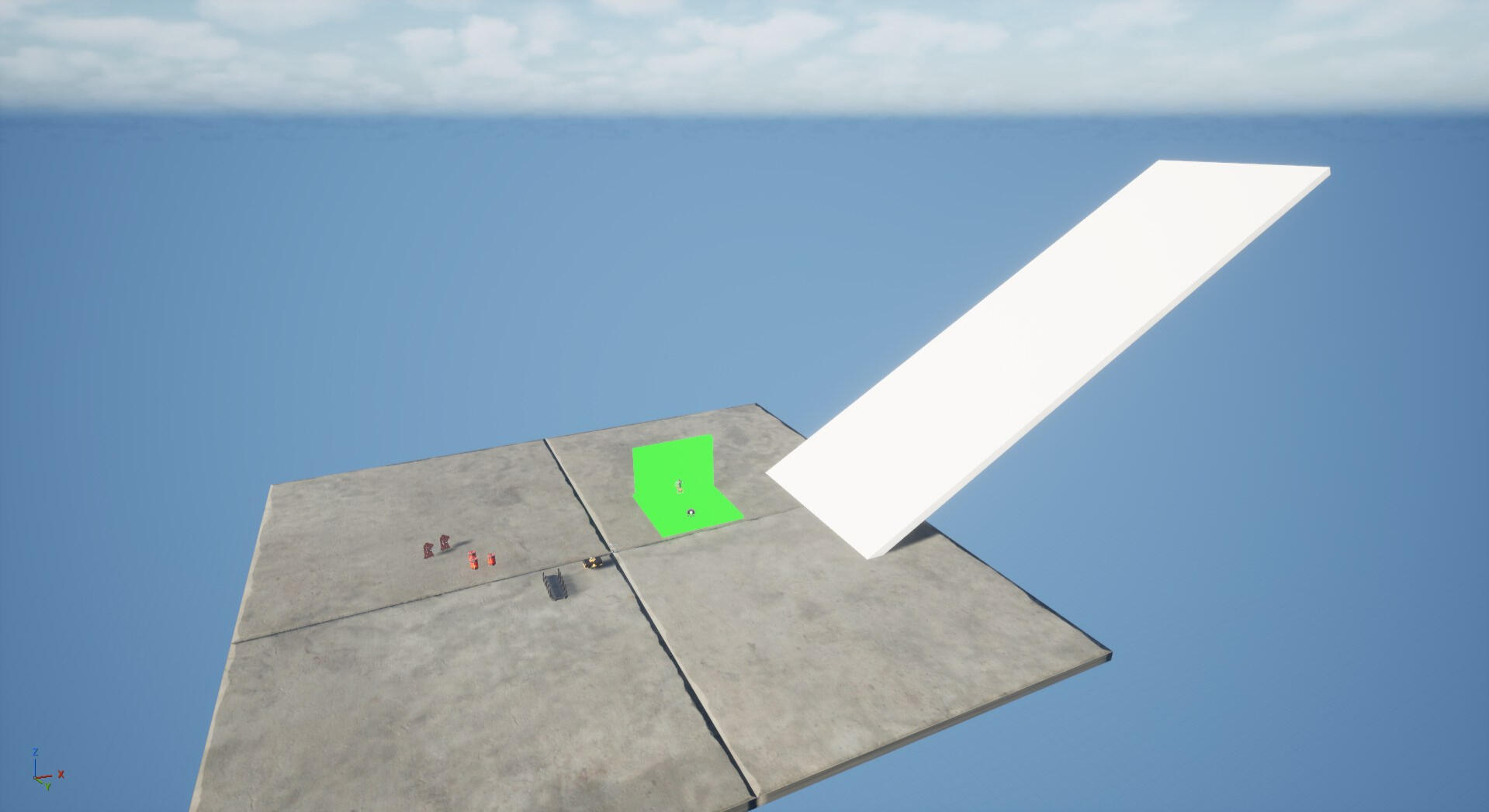
I helped with a lot of the movement for Technomania, most of this was testing, commenting and trying things out in a default scene such as the one in the image here.The movement for Technomania is easy to use yet the deeper you go the more you can master it.You of course have your regular WASD movement, a crouch that if you are moving fast enough becomes a slide. A sprint which makes you go slightly faster. A jump and an air double jump. You can also wall jump for another extra movement option.We were also testing wallrunning at one point in the game's development but later removed it since it proved to be too strong of a movement option for the player, allowing them to skip large sections of levels and enemies. Many of our levels at that point were not designed in a way that made the wallrun feel good to use.
Here we can see the navmesh that the humanoid enemies use in Technomnia. I was the one assigned to edit this navmesh and make it function.Although Unreal Engine 5 has a solid auto generation tool for the nav mesh there are also plenty of spots we don't want enemies wandering to, as well as wanting to force them in certain directions, as such I was editing a lot of this manually and double checking where enemies walked to ensure enemies wouldn't go "hide" in corners.
For Technomania we originally only had humanoid enemies which use the same procedural guns as the player, with plans of making a complex bossfight towards the end of the game. This proved to be too expensive for the team time wise.So we came up with a clever solution on how to add more enemies without adding a lot more development time. Turrets and Drones!These proved cheaper to design, test, model and program while also adding a lot more variety to the game.
I was tasked with finding a solution to having multiple levels in Technomania. I wanted a way to make it feel seemless since this is a high action game and being taken out of the action for too long might hurt the players experience.So I designed, and implemented these airlocks into the game with the help of a programmer. When the player steps into them, they lock behind the player, then load the next level ahead of them. The player can still move around while in the airlock and once the new level is loaded, it unloads the old one and opens the airlock!This made me have to put in all the levels into one master level and place them next to one another, with airlocks connecting them all, although this took some time (mainly due to my poor computers GPU) I feel like the final product was more than worth it.
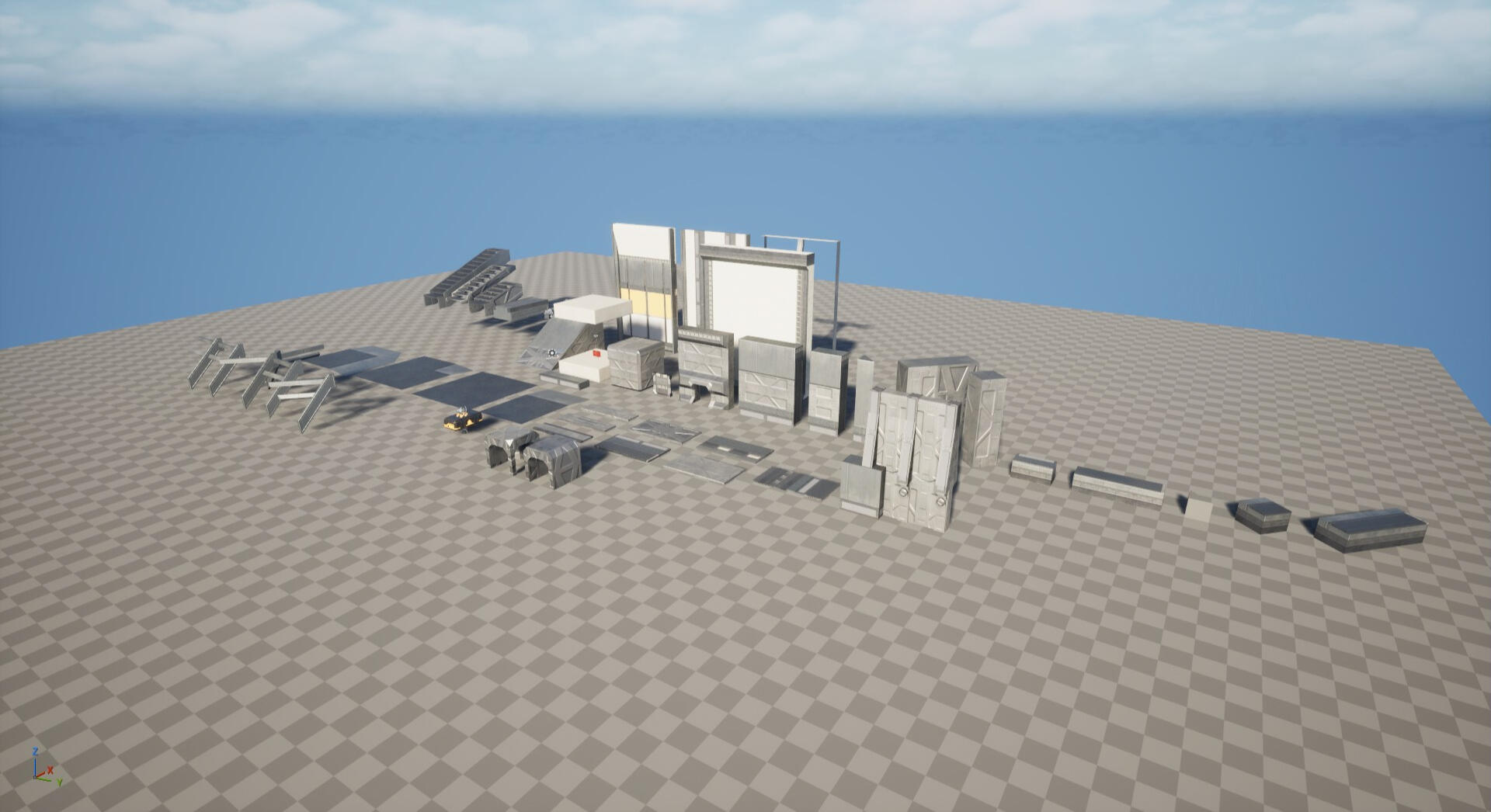
Although this is the last in order of this page, making the asset list was actually the first thing I did before I started designing levels. This was so that the artists wouldn't need to make 1000 different assets, textures and models for each different wall.So I created a simple list of all the assets we needed in the game and placed their models in one scene for the artists to later texture or redo in their own style.This I believe saved us a lot of hours of work and allowed us to have multiple highly detailed levels in a project that was less than 3 months long.
Nautilus
Level & Systems & Story Design
- Genre: Submarine Horror
- Platform: PC & PlayStation 5
- Engine: Unity
- Time: 9 Weeks
- Team Size: 12
Nautlius is an under water submarine horror exploration game. I worked mostly on systems but I also designed one level for the game.I worked on a lot of things during this project, due to the small team and large concept I had to split my attention on multiple things, which forced me to get better at being flexible and work where I was needed.This game went through a lot of itterations, from having plans to be multiplayer, to plans to make it in VR; The games systems were changed a lot during development, what I'll showcase here is a mixture of all those systems, some finished and many others never implemented due to time restrictions.
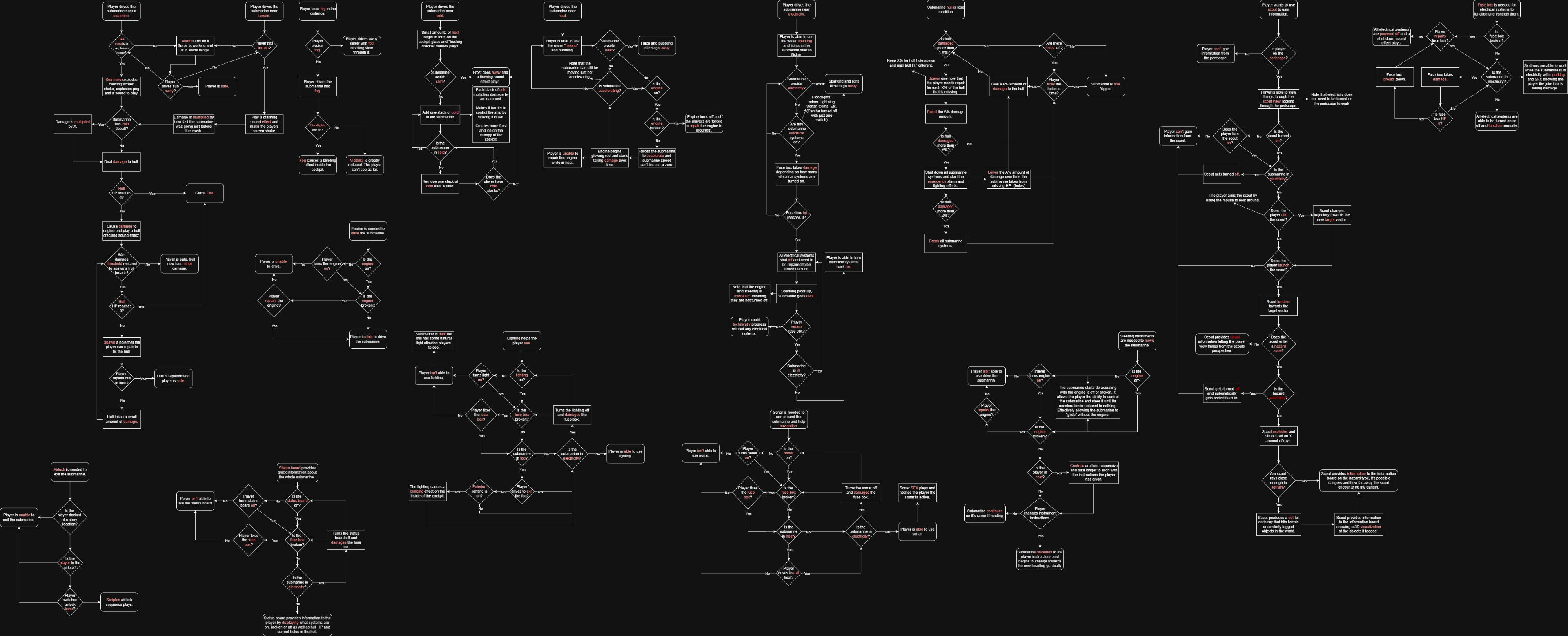
I designed all the submarine systems in Nautilus, this mega flowchart shows every connection, of how each system interacts with itself and references to other systems.This is the final version of the systems, since they were changed later on to fit a singleplayer
experience better.I made this flowchart to help both myself and other designers understand my design philosophy behind the systems as well as making it easier for the programmers to understand what systems needed to interact with each other and the hierarchy of logic.
Here we can see a more in depth one system at a time logic tree. I designed the system so that each hazard in the game only affected one or two systems. This means that the player isn't overwhelmed with things to do if they run into a hazard.Lets take for example cold; Cold slows the submarine down, but doubles all damage done by crashing. This forces the player to be more careful, and navigate slowly. Electricity turns off all electrical systems and damages the fuze box if the system is online until it breaks, the player can hence make a choice, stop driving and turn off all their lights and useful tools, like sonar and external lights, or drive through with those systems damaging the fuze box, potentially breaking it and losing their electrical systems for a longer time.Each system is designed in a similar way, with a choice. The player as such is forced to make these choices constantly, with each hazard being designed around an emotion.
Hull damage is fear.
Heat is panic.
Cold is dread.
Fog is unease.These emotions sometimes overlap; Hazards can also be avoided, building tension. All to create a horror exploration feeling for the player.
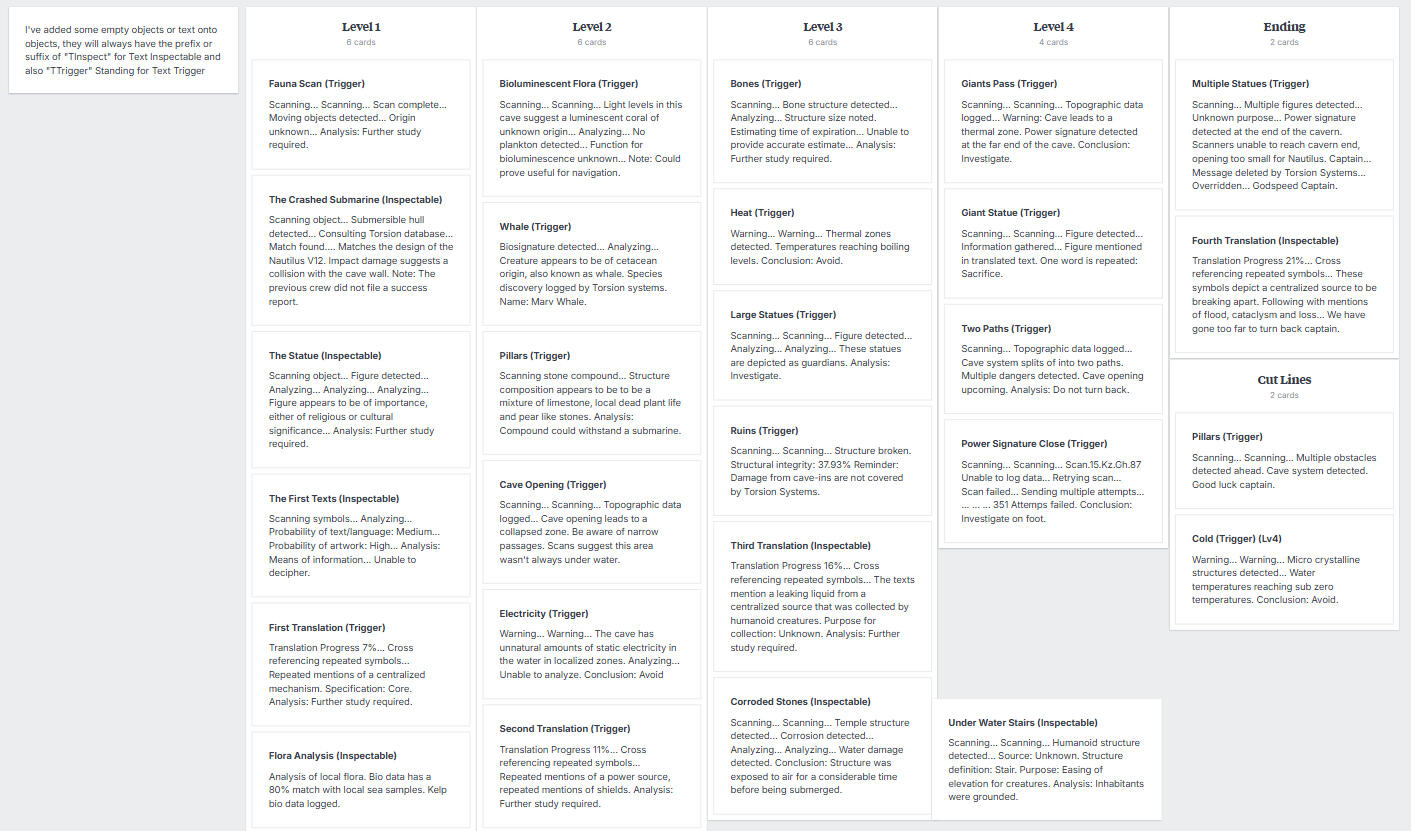
I wrote most of the texts for Nautilus and together with a programmer implemented them into the game. These are all built up with the idea of hinting towards the larger lore that another talented designer made. Together we created a whole world deep in the waters.The player interacts with these by scanning (pressing F) on certain interactable objects. Then a text to speech robot reads them out to the player. Some of these are also used to enforce the horror theme of Nautilus.My favourite line has to be: "Scanners unable to reach cavern end, opening too small for Nautilus. Captain... message deleted by Torsion Systems... Overridden... Godspeed Captain.We can see the implementation to the right here, with a bit of debug lines from when I was testing this.
I made some simple UI for Nautilus, focusing on function over form. I typically don't code much but whenever needed I try my best to fill the shoes of what needs to be done.This UI allowed us to play the game through the main menu, and later changed to a finalized version. It also allowed us to select which level we wanted to start playing in, which would allow people to test later levels in the game without needing to go through the whole game from the start which lowers the time to test.
I also made one level which I named the "Giants Pass" during development. This is the fourth and final level in the game and as such I designed it to be complex, challenging and trying to inspire a sense of awe.Multiple pillars need to be navigated around with the cold debuff meaning one crash could spell your doom. You then pass under the giant into a tunnel that twists and turns with heat in it forcing the submarine to accelerate, making the player have to maneuver quickly. It then splits into two pathways, each with a unique hazard, smoke on one side, electricity on the other, with the player having to choose what challenge they want to pick up. The tunnel then reconverges and narrows in before opening up for a grant reveal.
The final version of the level has a lot less pillars to give the player a better view of the giant holding up the cave, although I wish we had added more pillars for a larger challenge. I love the new pose the giant has. The lava replacing heat zones also adds so much to the caves below, and the grand reveal with all the statues really makes this level look amazing. I'm really happy to have designed this and what the artists turned it into.
Budget Cuts
Bug Testing
- Genre: Stealth Action
- Platform: VR
- Engine: Unity
- Time: 4 Weeks
- Team Size: 4
This project was a one month process of ad-hoc bug testing and running test scenarios throughought the whole game. Working together with a team of three other interns and the developers to fix and improve the Nightmare update for the game.I helped out by playing through the whole game, sending in bug reports and feedback to the devs and then retesting those same things once they had been changed.
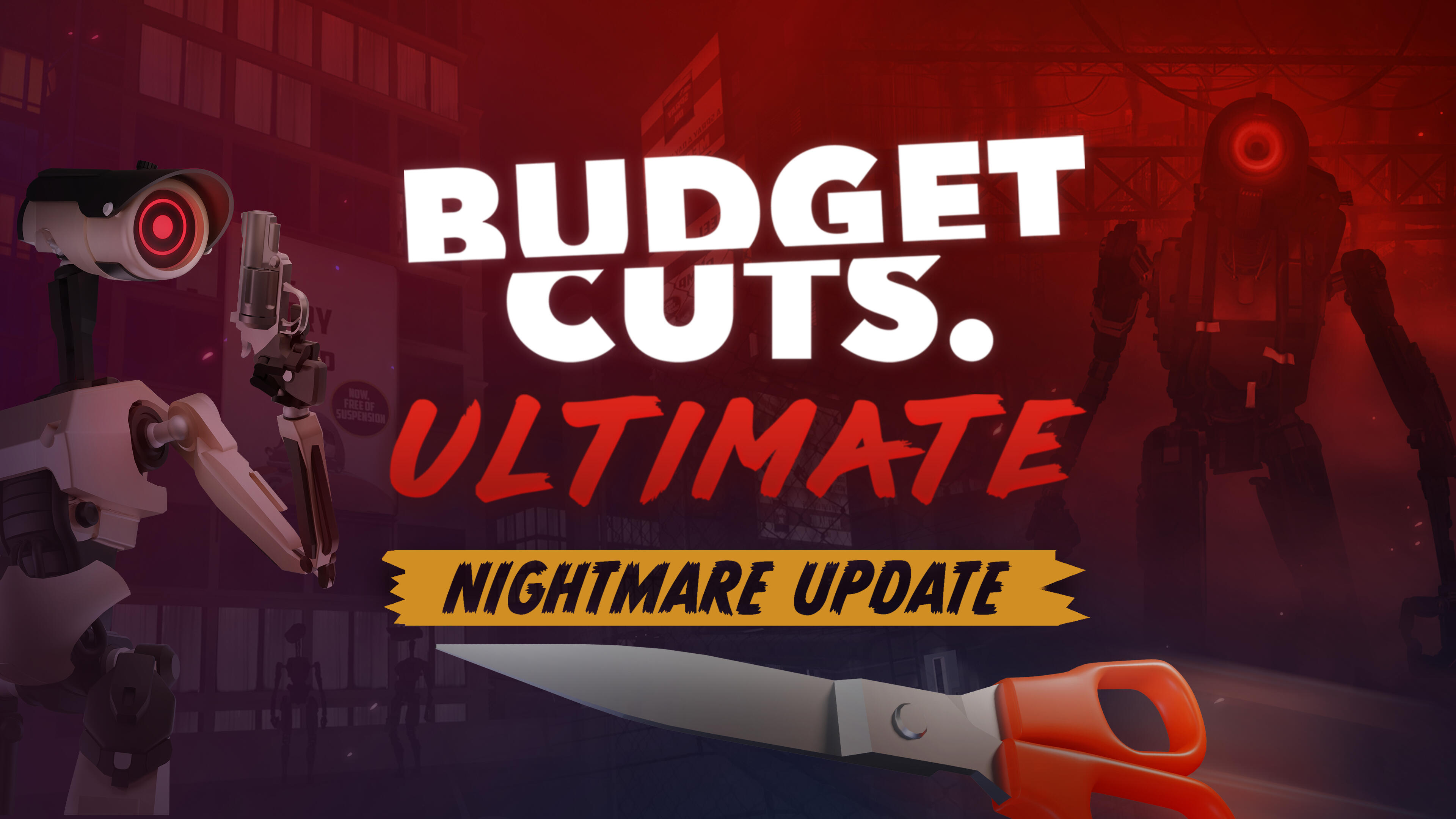
I did this project while working for Northify, a QA company based in Boden. I learned a lot of useful skills while working for them for 6 months, and working for Budget Cuts was my largest contribution during this time.I remember being to proud and excited when I saw my name in the credits after they released the nightmare update.
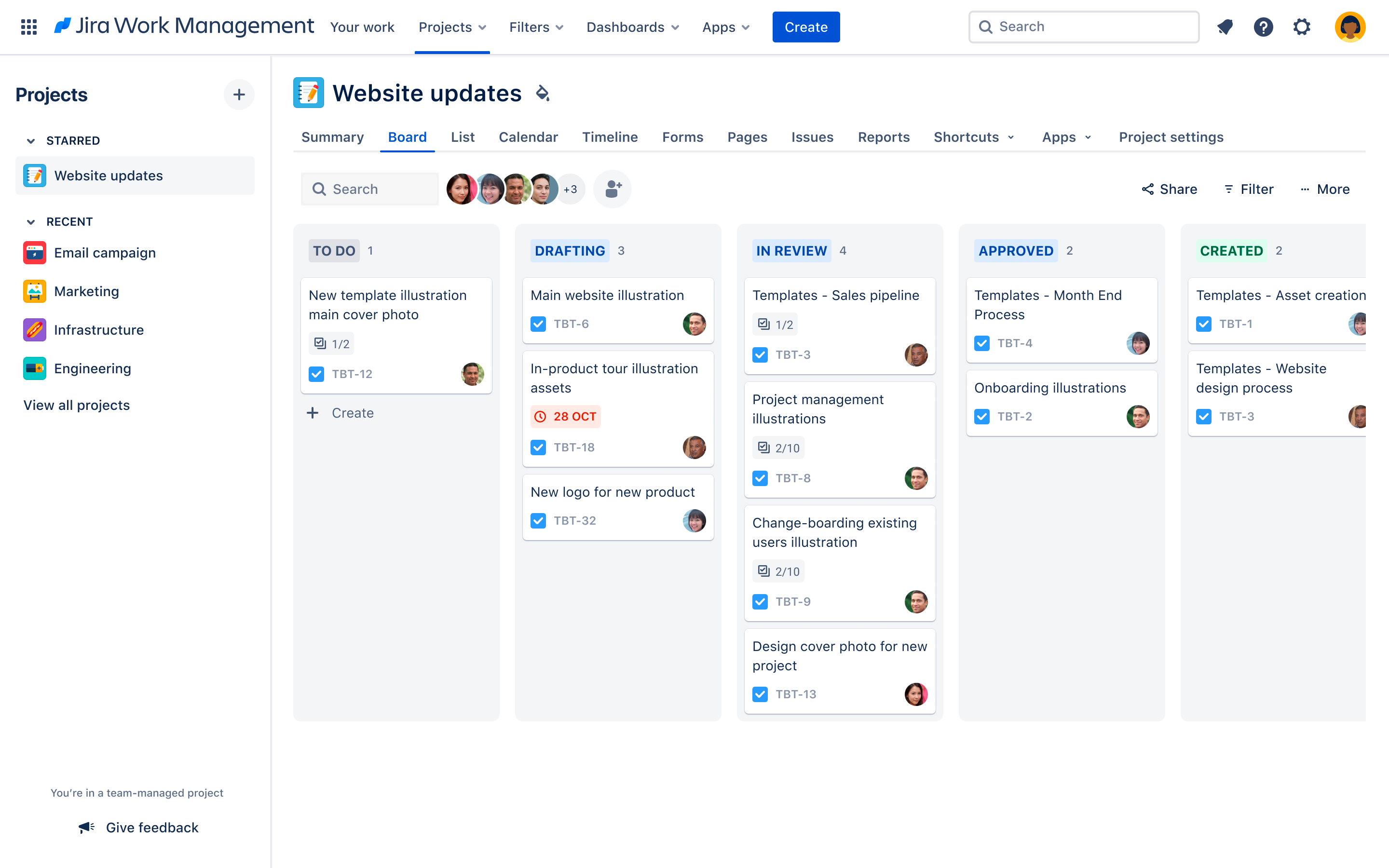
We used Jira during this project, and although I can't show any screenshots since we were under NDA while working for Budget Cuts and I no longer work for Northify I feel that it's relevant for me to talk a bit about what I learned.We used a typical Scrum board, with tasks aligned into different priorities. This helped us know what issues, levels and parts of the game were the most important to test. Overall I like this workflow, it's easy to understand and efficient, and speeds up communication between everyone working in the team without needing more than daily standup for meetings. Which was especially useful due to our limited 4 week time on the project.
Ecocide
Bug Testing, Data Gathering
- Genre: Arena Battler
- Platform: PC
- Engine: Unity
- Time: 6 Weeks
- Team Size: 15
This was my third and final game project at Futuregames. I worked as head of QA focusing on quality of level design and audio as well as player movement. I worked closely to fine tune how enemies interact with the map and how the player moves around it. Researching thoroughly on grappling mechanics in other games to make sure it felt just as good in Ecoside.
Soil Mates
Bug Testing, Play Test Analyst
- Genre: Co-op platformer
- Platform: PC
- Engine: Unity
- Time: 6 Weeks
- Team Size: 12
Soil mates was my second game project at Futuregames. Here I helped test the game as well as discuss many of the core design decicions with the other designers.I held a game test where I asked players questions and watched how they experienced the game on their own. Only giving them help when absolutely stuck.